The Rattling Skeleton

A blog owned by a man-skeleton with a monkey brain.

  • It’s been a while since I last posted here. I apologize. I’ve tried to write something for The Rattling Skeleton, but every time I’ve sat down, nothing of value has come out. It’s led me to wonder if I have what it takes—what it takes to write; what it takes to live. I don’t want to imply writing is an agonizing experience. It isn’t. When I’m in my groove, it’s pretty enjoyable. But I haven’t been in my groove for years. Now, when I write, it’s more of a struggle than it’s ever been before. I sit and stare at a blank page, and my mind goes blank. 

    Overcoming this no longer helps, because now I find myself doubting there’s worth in anything my mind creates. I doubt myself. I assume everything I believe is wrong, every fact I know is a mistaken memory. And even when I can overcome this, I hear a voice in the back of my head that asks if what I have to write is worth the digital paper and ink. After all, who am I to act like an authority on anything? I am nobody. I have no significant distinctions; I am a thirty-something man who struggles to hold down a job and still lives with his mother. 

    I’ve been trying to write for longer than I was writing. Every word, every story, comes out more hollow-sounding, more poorly written, than the last. My attempts to write horror have left me feeling like Garth Marenghi if somebody cursed him with self-awareness. Like him, I’ve been trying to write without ink in my stomach. I haven’t read enough books, watched enough movies, lived enough of a life. Like everyone else, I now spend my days interfacing with the world through computers and social media. The material world is now immaterial to me; the world is a scrolling feed, and all the people are posters. 

    We were all slowly losing our minds to the internet. The process began with its introduction to the public in 1993, accelerated with the launch of Facebook in 2006, and then gained momentum with the onset of COVID-19 in 2020. We used to have to remind ourselves that “online isn’t real life.” But now it is. Now, our parasocial relationships are more meaningful than anything else. Fox News can destroy so many families because, for the average viewer, Trump and the anchors are more active members in their lives than their actual family is. QAnon exists because a large slice of MAGA loves Trump more than their children and worship him more than their God. 

    However, the above example is only the most extreme case. Conservatism reached peak insanity faster than the rest of society because of its closed-off media ecosystem. But now we’re all crossing the event horizon that led to shit like January 6th, the breakdown of vaccinations, and a rise in family annihilations. The world is going insane; there’s no other way to put it. It’s going insane, and I am going insane along with it. 

    Even if I could write, I’m not sure if I want to anymore. What use is writing in a dying, mad world? Kurt Vonnegut once compared the effect of all anti-Vietnam War art and literature to dropping a pie on the military industrial complex from atop a six-foot ladder. Anything I could write about the present moment – about the fascist takeover, ecological collapse, the death of everything we hold dear – would be like throwing a firecracker at the sun. That’s the best-case scenario, where The Rattling Skeleton has a lot of readers, but this isn’t the case. I reckon about 80% of my readers are just bots trawling the internet; the average post probably receives only a handful of readers, at most. 

    I’m convinced I am too old to turn things around. I am chronically ill, in my thirties, and I live in a world that’s at most a decade from climate collapse. I can no longer make up for lost time, because all time is gone. All that remains is the running down of the world’s intangible machinery. I might still struggle, but it’ll be out of a mere obligation, a feeling that there’s nothing else to do. Well, in theory, I could kill myself, but I don’t think I will. This post is probably not a suicide note. But no promises. 

    It’s not a suicide note, but not out of any conviction that life is worth living. At best, life seems to be a value-neutral proposition, but one that will always skew towards the negative in the long term. We are born in pain and we die in pain. Suffering is guaranteed; pleasure and joy are not. If I had a choice, I would’ve avoided the whole experience. Nor would I recommend living to anyone else. But I’m here, and I’m too much of a coward to endure the pain of death voluntarily. I’ve suffered from enough pain in my life already. 

    Also, it’s best not to have people yelling at me. People tend to get mad at you when you try to kill yourself. So I guess I’m stuck here, with no reason to assume I’ll ever have a good or at least a bearable life, with no real outlet for self-expression, in a world that is going insane as it enters its death throes. I’m going to forget I wrote this and stare at a wall for the rest of the day. It’s the healthiest option for how to spend my afternoon. Maybe I’ll post again to this blog, perhaps I won’t. We’ll see.

    +
  • As is traditional for blog posts of this type, I must start with an apology. It’s been a hot minute since I posted here, and that’s on me. I haven’t been lazy, but I have been struggling to come up with meaningful things to say on topics that matter to me. It’s hard to find ways to discuss current events without simply screaming. 

    But I will persevere. I will also set more regular hours for my writing, which should translate into more regular posts. Asking for consistency from a writer is coaxing blood from a stone, but it’s necessary for me.

    I’ve also been thinking about the future of this blog. I want to continue posting unrelated entries as they come to me, but I also recognize that I lack momentum. I’ll complement the random essays with themed series to coax readers back regularly.

    I have two ideas for a series, and I’ll leave it up to a vote to decide which one to pursue. Both would take a long, long time, if ever, to finish. But provided no tragedies or societal collapses occur, I am willing to commit to the long haul. It might even be fun.

    The poll will be held over on this blog’s Discord server, so if you want to have a say, you’ll have to join. I assure you, this is not (only) a ploy to increase the number of members over there. Anyway, the series ideas I have are described below. Read them over well before you make your choice!

    The Greats

    Throughout history, there have been many people – primarily men – known as “the Great.” The title began as a suffix for the Persian emperors (they didn’t have the word “emperor” back then). Over time, the title became a nickname of sorts, bestowed on extraordinary people.

    This series would be biographies of every single person recorded as “[Their Name] The Great.” It would start with mythological figures, such as Ajax the Great and Yu the Great.” Once we were done with the somewhat-historical, we would move on to actual history. Here we begin with Sargon of Akkad and end with Bhumibol Adulyadej, King of Thailand from 1946 to 2016.

    But it won’t be a simple, straight biography. I want to use each of these people as a lens to understand why they were named the Great. Society gave some the title in their lifetimes, while others received it afterwards. Some used to be called “the Great”, but are not anymore. I want to reflect on what this title meant to the people who received it. 

    The list is a more varied one than you might expect, with some shocking commissions. Julius Caesar isn’t on the list, but his rival Pompey is. Napoleon isn’t, but Kamehameha, the first King of Hawaii, the “Napoleon of the Pacific”, is. Despite its position as the world’s modern superpower, there are no Americans on the list.

    (There is one Canadian. Wayne Gretzky, a hockey player.)

    Trials of the Century

    You’ve probably heard the term “Trial of the Century” before. You might’ve assumed it was about one trial, and that every time the term is used, it refers to the same trial. But, it doesn’t. There have been many “Trials of the Century”, stretching from the 19th to the 21st century.

    It is a title used for only special trials: a sensationalizing term for a sensational story. It refers to murder trials, presidential impeachments, and heinous crimes against humanity. Through a telling of these trials in chronological order, a story of the modern world forms.

    In opposition to The Greats, where there are no Americans, they abound in Trials of the Century. The title is a uniquely American term, born of a culture that was coming of age in a time of mass media. But there are non-American trials included: the Dreyfuss Trials and Nuremberg, among others.

    Also, unlike “the Greats”, the vast majority of the Trials of the Century received that title in their day. They thus serve as ways to understand the societal anxieties of that moment, in that moment. They are stories that embody things that both attracted and repulsed the masses.

    This would be a series describing the various trials in detail. They’ll have to incorporate biographies of those involved. There will also be digressions into contemporary historical events. This would take as long as “The Greats”; “The Greats” has more essays, but entries for “Trials of the Century” are longer.

    Final Crisis on Infinite Flashpoints

    Both the Big Two comic companies (DC and Marvel) have run various “event comics” over the years. The most famous examples of these are DC’s “Crisis on Infinite Earths” and Marvel’s “Secret Wars”. From infrequent rumblings, they have expanded, and many event comics appear every year.

    There are hundreds of these “event” comics: Wikipedia lists 150 for DC and 308 for Marvel. Many of them consist of at least 12 issues, with some spanning hundreds, even thousands, of pages. Almost all span many issues, and several writing teams are involved.

    Reading one crisis event is at least a month-long commitment. Some tasks take less time, while others take more. And I am going to read them all, in chronological order, jumping back and forth between DC and Marvel. I am going to read through almost all the crucial events in modern comic books.

    I’m going to read some of the best that comic books have to offer. I will also read some of the worst trash to ever grace the medium. Event comics are complex epics, often too complicated for the writers and artists. Sometimes they can make everything work together; other times, you get “Identity Crisis”.

    Why do this? Comic books are inseparable from pop culture. In the ’80s and ’90s, they were an incredible mirror of the mass culture around them. Over time, comics became central to mass culture, influencing it in ways other media never did. To understand American pop culture, you need to understand DC and Marvel.

    ***

    Here is a link to the Discord server. The poll will be live as soon as this post is.

    https://discord.gg/NQSYbhz9

    +
  • Recently, I was enjoying my favorite activity: doom-scrolling Twitter and listening to Spotify. My feed was filling with news of ICE’s raid on MacArthur Park. At that moment, Spotify played Richard Harris’s cover of “MacArthur Park.” I listened to Richard Harris sing about the end of a relationship that wasn’t his. At the same time, ICE agents on horseback lined up for a TikTok video after scaring off a summer camp of children. It was a moment of perfect clarity that crystallized everything I had felt since January.

    MacArthur Park is melting. The dream of the last century is melting. We are melting. The cake that we have and have eaten, too, is melting, and we’re only now realizing we’ve lost the recipe. For those born after America’s peak – all the Millennials and Zoomers – we’re all Richard Harris. We’re all singing about the end of a relationship that was never ours. 

    The American Dream was never ours, but it is only now that we realize what that means. We had resigned ourselves to lives of mediocrity, but that was only an illusion of the stagnant 2010s. That stagnation is over. Now our days echo with the din of drums, heralding calamity as they draw closer and closer. MacArthur Park is melting, and I never even got to visit.

    It’s been a week since the ICE raid on MacArthur Park. In that time, MAGA has shown deep cracks in its foundation. Trump has made the mistake of pushing too hard on the Epstein issue. He is insisting that the files both never existed and did exist, but that Clinton, Obama, and Biden made them up. Of course, the Clinton administration never investigated Epstein. Bill Clinton was also a close associate of Epstein, but it doesn’t seem to matter. Now MAGA chuds are calling each other retards on Twitter. At the same time, their influencers chide them for ever caring about Epstein. We’ll see whether this has long-lasting consequences for Trump. 

    Trump has also begun to test the waters on his latest act of fascist authoritarianism. He is threatening to revoke the citizenship of a natural-born American. There is confusion about why his target is Rosie O’Donnell, a comedian with whom he had a beef back in the 2000s. But why would it be anyone else? O’Donnell is so perfect that it couldn’t be anyone else. Trump – like many of his faithful die-hard followers – isn’t animated primarily by material issues. Those do matter, but they’re secondary to resurrecting irrelevant vendettas. Any MAGA person who has never posted on 4Chan is somebody whose concept of gay men is 1980s John Waters. It’s somebody who thinks all Mexican gangsters are the spitting image of Danny Trejo.

    Neither Trump nor this subset cares because they’ve avoided the bill all their lives. For Trump, this is very much literal. The only shrewdness Trump has shown is realizing that billionaires never have to pay. Instead of paying construction workers, he has them deported. He offers his lawyer free parking and hotel stays. He avoids responsibility by trusting that his power and wealth insulate him. He is the living embodiment of the saying: “If you owe the bank a thousand dollars, you have a problem. If you owe the bank a million dollars, the bank has a problem.”

    For his followers, this is true more on a conceptual level. These people are small business and car dealership owners, America’s petty nobility. They are people who have fallen into a dangerous intellectual trap. On the one hand, they’re wealthy enough to avoid any consequences for their actions. As a result, they cannot conceive that anything they do can have consequences. But, they’re not so wealthy that there isn’t somebody higher on them on the social ladder with more power. This breeds a resentment and a feeling that they are far weaker than they think they are. 

    Marx said that history repeats itself twice: first as tragedy, then as farce. The great tragedy of the 20th century – the World Wars – had the exact origin as the farce of the 21st century will. In both cases, it is the butcher’s bill of the world-spanning empires coming due. The great powers of Europe sought to force each other to pay the bill to their maximal extent. Each believed that once the bloodletting had stopped, they would be atop the pile by having bled less. But when the bill comes due for America, we will refuse to pay it. The farce comes from the fact that nobody will be able to make us pay it. Any attempt on the scale of the 20th century will result in a general nuclear exchange and humanity’s end. Any lesser attempt runs into America’s indomitable ability to fold its arms and say “no.”

    If you want to know what the next few decades will be like, it’s this image, repeating forever:

    Donald Trump gives his account of infamous G7 photo with Angela Merkel and  other world leaders | The Independent | The Independent

    That picture is from a climate change conference. Climate change will be how the wheels of history ensure somebody pays the butcher’s bill. America will have to pay some of the bill, of course. But we won’t be the only ones, nor will we pay the most significant share. Bismarck said a special providence protects idiots, drunkards, and America. This is true especially now that we are the supreme idiot, drunk on our power.

    But what does that mean for us, at this moment in history? It means things are about to get even stupider. It also means that things are about to get even more evil. Alligator Alcatraz is only the beginning. It is the harbinger of the next few years, where the dumbest people alive will slaughter and rape on scales unimaginable to the sane, then do TikTok dances on the corpses or soyface at their victim’s bleeding orifice. 

    Anyone who lived through the Bush II years will have some inkling of what I am talking about. The Iraq War was the canary in the coal mine for what this century was going to bring. Soldiers torturing naked prisoners at Abu Ghraib and taking funny pictures with their victims. An occupation force reluctantly offering an impoverished nation credit cards full of money they couldn’t use. The supreme imperial world power sends a dick enlargement surgeon to speak with the religious leader of Iraqi Shi’ites. This was the warning; what comes next is going to be both far more horrifying and far more farcical, a genocide done as a slapstick routine. 

    And what of the Democrats, the official opposition? Well, they’re attacking Zohran Mamdani, who won the New York City Democratic primary. They call him an “anti-semite” who doesn’t love Israel enough. This tactic didn’t work for his opposition in the primary, but that doesn’t matter to the party as a whole. The Democrats have always acted like one of the “natural parties of government.” Those are the centrist parties in multi-party parliamentary democracies that stay in government. The only problem is, America isn’t a multi-party parliamentary democracy. 

    There is no center in American politics, no stable roost from which the Dems can dictate policy. This is clear now, more than ever. The Republicans embrace open fascism and make clear they intend to govern forever. The only way the Democrats can oppose this is by abandoning their self-image. They must form a left-wing coalition that can overcome the Republicans. This is only possible through elections and organized protests. Suppose their response to Zohran is any indication. In that case, they will not do this, and any attempt from the grassroots level to force them to will face opposition.

    Many people criticize the Communists for not allying with liberals to oppose Hitler. But when Hitler became Chancellor, the Social Democrats urged calm. They believed the Weimar constitution would survive Hitler.

    There will be protests against ICE, the deportations, and Trump. They’ve already started, and no amount of Democratic tut-tutting will stop them. But these protests must organize themselves into a coherent movement. Otherwise, they will not have the staying power necessary to defeat American fascism. Any success thus far has stemmed from Trump’s cowardice, which permeates his administration. This won’t last forever. Either Trump will feel cornered and compelled to double down, or he’ll die and a new cadre of leaders will emerge. In either case, the other shoe drops. What happens after that, nobody knows, beyond the fact that it’ll be a bloodletting of one kind or another. 

    What worries me the most is ICE, which the Big Beautiful Bill has enlarged considerably. By the 2026 midterms, it’ll be a proper paramilitary force, Trump’s paramilitary force. It currently focuses on mass deportations, but that’s due to its name. Its purview can change even if it officially remains the same. The Nazi SS started as a mere bodyguard for Hitler: its name is an acronym for “Protection Squad.” It kept this name even as it became both the Reich’s central law enforcement body and the armed wing of the Nazi Party. Come the 2026 midterms, ICE might be “providing security” for voting stations.

    Doomer, as I may be, I don’t think this situation is hopeless. But I do believe time is running out. With each passing day, the available paths that avoid fascism become fewer. The aperture of history is narrowing around us. If we continue to let inertia control the flow of events, we face a dark future ahead. The cake in MacArthur Park is melting, and we’ll never have that recipe again. But that doesn’t mean we’ll lose the good things in life with it. That only happens if we continue to allow those above us to prance around on horseback. Every day they get to hold office is another day where things get worse. 

    I’m not one for “call to actions”. I have no plan, and I wouldn’t know where to start. I trust you as much as I trust myself. I think you know what you have to do to fight back against the encroaching darkness. Whether that’s taking part in a protest or helping out the oppressed indirectly, you know what you have to do. Success isn’t certain, and the odds are stacked against us. But if we don’t do something, how can we look at ourselves in the mirror after all is said and done? So do something, even if that something is as simple as screaming in the face of the people who keep you down. Scream enough that they can’t enjoy oppressing you. Scream so much that they can’t look themselves in the mirror.

    +
  • It’s strange, growing up in a world that already seemed doomed to die before you were born. 

    Even before I became aware of how profoundly we fucked up the world, I was told the end of the world was nigh. But when I was a child, the causes leading to the end of the world were different. I attended a fundamentalist church between the ages of roughly eight and seventeen. This was a Southern Baptist church in the middle of New England. My family also attended other churches during this period. We passed through the doors of several Episcopalian churches for a time. But we always returned when those Episcopal churches became too “progressive.”

    This particular church never declared the end was near, but the church elders did. At social gatherings, it was common to speculate which person was the Antichrist. Others proffered their beliefs that Russia or China was Gog and/or Magog. In its basement, the church had a reading room. It was across the hallway from the Sunday school classroom for elementary-aged children. There was an entire bookcase devoted to apocalyptic literature. This collection included both print and hardcover editions of the Left Behind books.

    But the end of the world for these people is not the same end of the world I speak about now. The end of the world, as depicted in Revelation, is an event well-plotted out in advance. The description given may be vague and allegorical. Still, if you can interpret world events, you can gain insight into most of what is about to happen. There will be a lot of suffering. But if you can endure it for its allotted period, you will enter into New Jerusalem, overseen by Christ.

    Thus, my childhood was what I can best describe as a schizophrenic social environment. Discussion of my life – my college plans, my social life, etc. – mixed with the end times, an event starting soon. Yet I was still expected to observe the formalities of a society approaching its end date. The church remained conservative. It remained devoted to upholding social arrangements that they believed were dying. Denying they were about to die was one of God’s many unspoken commandments. 

    I never asked one of these church elders to describe the post-tribulation world. I doubt they would’ve given me a meaningful answer if I did. I reckon they would’ve described a world that was an endless tract of suburban expanse. A nuclear family in every house and a church in every neighborhood. No gays, though, nor non-Christians (Jews maybe excepted, but kept out of sight, out of mind). No undeserving poor people, either; no “welfare queens” or “illegals”. The unspoken claim, of course, was that there wouldn’t be many non-white people in the world. Just the “good ones”, and they would, like the Jews, be out of sight, out of mind.

    As I’ve gotten older, I’ve lost my faith in Christ, but not in the world’s impending end. Only the ending I foresee is not the final, cataclysmic struggle between good and evil I was raised on. I now see that version as both hopelessly naive and deviously sadistic. The parishioners who clung to it often shared the status of well-off but “downwardly mobile.” They saw a world they felt was slipping out of their grasp. It was only natural to believe that vindication would come, to assuage oneself that the anxieties of the modern age are only temporary.

    But the ending of a world never goes according to plan. Constantine initiated the end of pagan Roman rule by legalizing Christianity. But he never foresaw that the Christianized Roman Empire itself would suffer from religious strife. The world of the Ancien Régime came to an end when the representatives of the Third Estate gathered to swear an oath. Yet, they could never have foreseen that they were starting a chain of events that would lead to Waterloo. The Emperor Meiji ended the samurai era when he dissolved the Tokugawa Shogunate. But the mushroom clouds appeared over Hiroshima and Nagasaki long after this death; how could he even imagine such an outcome? 

    It’s hard to say when the end began, exactly. Some point to 9/11; others to the Trinity Test. Fukuyama was onto something when he declared the “End of History.” The collapse of the USSR, the end of the Cold War, and then the global triumph of neoliberalism have ushered in a new era. This era features the gradual erosion of our ability to address social-scale problems. Venture funding and shareholder supremacy have weakened corporations’ ability to develop long-term plans. Market reforms have eroded state power. 

    COVID has revealed how far our institutions have ossified while accelerating the decay. States failed to enforce mask mandates in the face of public resistance. At the same time, corporations struggled to adjust to the strain placed on the supply system. They had allowed their supply chains to become weak and unable to handle delays. Yet neither public nor private actors learned any lessons from the pandemic. They only realized that when the next pandemic happens, they ought not even try to fight the outbreak. In the new world, if you cannot deal with a problem, refuse to acknowledge its existence.

    We live in the Age of Entropy. The End of History is here, and what it looks like is the winding down of a vast machine while parts rust and fall away. Please don’t bother trying to find the repairman; he was laid off years ago, when the machine was still working fine. We assumed we would never need him again. We thought the machine would continue to operate at full capacity, as it had been doing for as long as we could remember. The future was meant to be just the present, extending into eternity.

    Not everyone realizes the repairman left so very long ago. They assume he’s still around, working secretly, behind the scenes, having taken a secret identity such as “Q”. They believe he is fighting the evil people who have sabotaged our perfect machine. It is a simple fantasy – that there are people out there who are both in control and intelligent. Yet, the people in control are not smart. To be in a position to gain power, you must believe the machine is still functioning. You have to think that the gears are not rusted, and that the cogs are not falling into the abyss below.

    Every day, I grow more convinced that we have missed the deadline to turn things around. Even if people who are capable of building a new machine get into power, I fear the necessary tools are long gone. They were all sold off when the repairman was laid off. What happened when the government needed people to stay inside for a few weeks and wear masks? About a third of the United States and at least a tenth of the world’s population are in a frenzied state of social paranoia. This was all the result of having to make the most minor sacrifices. What will happen if these people have to adjust to fundamental, revolutionary reforms? You know, the kind required to stave off environmental and societal collapse?

    I don’t know what the end of the world will look like, except for those portions that are already unfolding before us. I cannot and will not predict the final destination. Still, I will offer some predictions about the journey to that destination.

    You are going to see violence on a scale you will go mad from comprehending. At the personal level, people you know and love will lose their minds. They will believe things in five years that not even the most Q-brained person today believes. These beliefs will drive them to harm their loved ones, directly through abuse and acts of violence, and indirectly through political action. They will elect politicians who will make Ted Bundy look like a swell guy.

    At the corporate level, profit rates are expected to continue declining. As a result, the C-suite will push for punitive treatment of workers and exploit consumers. Those executives become consumed by their sadistic exercises of power. They will understand what Hannibal Lecter meant when he said, “If one wants to become like God, one must do as God does.”

    At the state level, those leaders I mentioned will face an ossified state capacity. They will run out of the ways politicians used to hurt the “undeserving” in society. There will be no more social safety net to slash, no more methods of punitive policing to enact. Yet, they will need to prove to the voting masses, who demand more, that they are crueler than their last leader. In that moment, they will begin to press the forbidden buttons. Wars and rumors of wars will reach the ears of people who demand more, and then the slaughter will commence in full.

    And I looked, and behold a pale horse: and his name that sat on him was Death, and Hell followed with him. And power was given unto them over the fourth part of the earth, to kill with sword, and with hunger, and with death, and with the beasts of the world.

    Unlike what I believed in my youth, the actual apocalypse we fear is unlikely to end in salvation. There are many people alive today whom one could call the Antichrist, if so inclined. But Christ? He isn’t coming back. He came to Earth two thousand years ago to preach his message of peace and goodwill, and they crucified him.

    What will become of humanity? Sometimes I say that this will all end with our extinction, that things will get so bad we won’t be able to adapt. If climate change doesn’t kill us, then nuclear war will, or a new disease out of melted ice, or something. But maybe that is naivete. We’ve survived the apocalypse before. But what will come out the other side of the catastrophes the coming decades will unleash upon us? Will it be something we want to call “humanity?”

    The descendants of the Holocaust’s victims today are committing genocide in Gaza. Today, they run prison camps where child rape is a daily occurrence. There is no guarantee that people will become stronger as a result of suffering. This century promises atrocities far larger and more depraved than the last. I fear that the survivors of those, if they don’t go on to commit their own vile atrocities, will be only a society of husks. A society of people resolved to exist until the time comes for their body to drop away and their soul to depart.

    +
  • 32 isn’t much of a milestone birthday, all things considered. You don’t get many of those once you reach adulthood. People only care when you’ve reached another decade; some care when you turn 35 and 55, too. That’s just the way life is; after a certain point, the new memories and new summits begin to spread out, further and further, until you can’t see others from your most recent summit. 

    Still, it’s worth taking a moment to pause and think about what the passing of another year means to me. I’m fully an adult now, biologically speaking. Socially speaking… things are more complicated. I still live with my mother. Yes, I am the 30-something loser who plays video games all day that Rep. Scalise was talking about. No basement here, though. Like many people in my generation, I’m stuck in a state of arrested development. The things that society insists somebody needs to be genuinely “adult” – a home, a car, etc., etc. – are simply beyond our means. 

    It also doesn’t help that my mental illnesses have only gotten worse the older I’ve gotten. I’m no longer actively suicidal, but that’s really the only improvement I’ve seen recently. If this is rock bottom – and I hope it is – then I’ve been stuck at rock bottom for so long I can’t remember anything else. I’ve wallowed in this quagmire for… How long ago was 2017? Eight years ago? Jesus. 

    There are a lot of reasons why I’m stuck here at rock bottom, why I can’t write, can’t keep a job, can’t keep myself sane. Many of them are beyond my control, and I’m not just saying that to exculpate myself. I’m a product of my environment, my society, and my health problems. There’s simply no way around that. However, I must also admit that I’ve been very passive when it comes to living my life. 

    I never thought I’d make it to 32. I assumed either I’d die from health complications or from suicide by now. So I never bothered to plan long-term. And now I’m into the main stretch of my life, and I don’t know which way to turn. 

    When I was younger, I would tell people I was going to give myself until thirty-five to “make it” as a writer or director, and, if that didn’t work out, I would then return to college and become a high school teacher. But I was just saying this so people didn’t realize how much of an impostor I was. I never gave it serious thought. Well, I suppose I have three years left until I face the music. Somehow, three years feels like too much and too little time. 

    Segueing to something closer to home, I’d like to take a moment to discuss this blog. I’ve been running it for about half a year now, and so far, I am pleased but unsatisfied with it. I’m glad that at least some people are interested in it, but I’m unsatisfied with the effort I’m putting into it. I feel like I’m not putting enough “content” (ugh, that word). I feel terrible because right now it’s summer, and that means I’ll be posting even less than before, unless I make a determined effort not to. We’ll see. I’m aiming to write at least a couple of hours every day this summer, but only some of that time will be dedicated to my blog. Some of it will be for my newly relaunched Patreon, and some will be for other unmentioned projects. I have a few posts planned for the rest of this month. I hope I can get through them all.

    I feel like I’m running out of time. Maybe I’ve already run out of time. I hope not. I have to keep trying, even if it is too late for me. There’s nothing else left to do. If you aren’t living, you’re dying, and I’ve been dying the better part of these last eight years. 

    I’m sorry this post was so rambling. I just wanted to get some thoughts off my chest, clear my mind, and also post something on this blog, since it’s been almost a month since my last entry.

    +
  • Dear Charlotte,

    You don’t know me, and you will never know me. A teenage trans girl and a thirty-something cis man don’t often inhabit the same social circles. But even if we did, the chance we might’ve had to get to know one another has now passed. 

    You are, as I understand, a young woman who took her own life on May 2nd. Your last post on Twitter functioned as a public suicide note. It consisted of only a picture and seven words:

    It’s a pretty view

    Long way down

    I’m not here to judge you, Charlotte. Nor am I here to parse out your reasons for jumping. The inciting incident that convinced you now was the time to climb that bridge is none of my business. Hell, it was probably something minor in the grand scheme of things. I know it was for me the two times I attempted suicide. The straw that breaks the camel’s back can only do so thanks to the onerous burden all the other straws contribute. 

    No, we all know why you did what you did. It’s the reason why 79% of trans Americans considered suicide in 2022, and why 39% tried to end their lives. I reckon it’s the same reason why most people who attempt suicide do so: we live in a world that is not made for us. We live in a world that is crueler than we can bear. We live in a world made for a run by the most vicious bastards and bitches we can imagine. 

    We don’t even need to speculate on who those monsters are. They’ve made their identities clear. There’s a reason I didn’t link to your final post; many cretins have congregated there to celebrate your passing. I won’t bother to quote what they’re saying, because we’ve read it all before. They are as stupid and unoriginal as they are petty and cruel. What they say doesn’t matter because their ideas and opinions don’t count. They have no right to condemn you, no right to feel the way they think, no right to make others suffer. You were a better and more complete person than they hoped to be. I know very little about you, but I still feel absolute certainty in this judgment. 

    I’ve seen some of the memorials posted by people who knew you. They describe your passions, your sense of humor, and the great potential you showed. They will miss you; they will carry on and honor your memory. Somebody attempted to deface your suicide spot with hateful art; their attempt failed. Your site is now strewn with flowers. I’m sure your friends will continue leaving flowers until the transphobes admit defeat.

    As I said, I won’t judge you for what you did. That’s not my place. Besides, I don’t think what you did was truly your fault. Suicide is not something that bubbles up from the inside, as is commonly supposed. It is imposed upon us from the outside. I am sure you fought as long as you could. We all do. I am also sure you were stronger and braver than I am. To be a teenager is hard enough. To be a teenager in 2025 must be damn near impossible. To be a transgendered teenager in 2025 seems to me one of the most onerous burdens a person can bare. The fact that you could only shoulder your struggle for so long is understandable. What isn’t understandable is that the world made it such an onerous burden in the first place. 

    The forces of evil continue to gather strength with every passing day. They will seek to snuff out all the lights that flicker in this world so they may dance in the darkness left behind. We who are still alive and carry a quantum of goodness within our souls must push back against the darkness. This is the solemn oath I, as one of these living, make to you, Charlotte. Your struggle is over; rest now. 

    For those still around, we must create a world where people like Charlotte can admire that view without it being their last. 

    Dear Stonetoss,

    I’m writing this to you to say this: you can still stop. You can walk away from your comic, from your online persona. You can live an everyday life still, or as close to normal as is possible for a cretin like you. Nobody online will miss you. Indeed, not your haters, but neither will your “fans.” They supported you for the most vacuous reasons: you made people they hated feel a little worse every time they saw one of your strips. Everything you’ve ever drawn is as disposable to them as a slur hurled out a car window at somebody on a sidewalk. You, as a person, are disposable to them. If they found out tomorrow you killed yourself, they would shrug their shoulder, say “that sucks,” and then continue posting about crime statistics and skull shapes as if nothing happened. 

    They might not even do that. After all, despite your Aryan-sounding name – Hans Kristian Graebner – you’re a Puerto Rican by descent. You’re a Latino, and thus, to most of the people who enjoy your content, you might as well be sub-human. Of course, you’re not sub-human to me, but what do you care about that? You’ve spent most of your adult life seeking to enrage people like me. You think our opinions are worthless, that we are useless. Very well, then. I’m sure you’ve made the right choice to embrace the ideology that seeks to kill all non-white people, while you do not meet their standards of white. 

    Your haters are now mocking you online for complaining they’re treating you poorly. You’re right that they are; they’re calling for your death, they’re posting your address and your birth name. But have you considered that you deserve all this? Have you pondered what would happen if you acted the same way in real life as you do online? What would happen if, for instance, you went to Charlotte’s funeral and mocked her corpse in front of her family? Oh, what am I writing? Of course you have. That’s why you stick to posting your online comics and wish people would stop sharing your identity. In the real world, people would see you for what you are: a loser, a lonely little bastard who can’t feel good unless he’s making others feel bad. But online, you can delude yourself into thinking your voice matters and that what you say is worth listening to. 

    I’m sure you’ve stopped reading by this point. Or perhaps you still are reading, but only because you think I’m triggered and want to savor my anger. But in this moment, I am not angry at you. There have been times when I wanted to vent my righteous indignation in your direction. But those times are long gone. Now I just pity you. You’re like every online troll who’s trolled for too long. You’re a sad, lonely, pathetic man who spends his days making comics about how much he hates the blacks, the gays, and the Jews, because he’s burnt every other bridge in his life. 

    I want you to think on this, Hans: someday, you will die. This isn’t a threat. It’s only an acknowledgement of a basic fact. Death comes for all of us. The young and old, the rich and poor, the good and wicked. Someday, you will face eternity, in whatever form it confronts the recently deceased. I want you to understand that, at this moment, this is your legacy: 

    If they even think of you, this is what people will think of, long after you’re gone. Your poorly drawn comics where you mock dead children, rant about how the Jews control the world, and call black people savages. This is what you will leave behind. Your mourners – if there are any – will be the most pathetic, soul-curdled examples of modern man. Do you think they like you? Do you think they are even capable of picking you? 

    Be honest with yourself, Hans. What do you want people to think when they see a picture of you? 

    Do you want them to think what they do now? Because I wouldn’t. I would dread waking up in the morning if I knew I was as roundly despised as you are. 

    You still have a chance, Hans. You have an opportunity to live an everyday, happy life. Charlotte doesn’t have this chance because of people like you; she never did. 

    +
  • After much consideration, I’ve decided the time has come to resume my Patreon. I’m unsure if I’ll be able to meet the demand of a short story a month, so I’ll keep that part of the situation flexible. I’m also keeping the price the same: only $1 a month for everything! I will accept more than a dollar a month if you feel generous. 

    I base my Patreon short stories on ideas sent to me by subscribers, so please do pitch me any ideas you may have. I’ll probably get through them in whatever order they come in.

    Link to my Patreon: patreon.com/skeletondandy

    Link to this blog’s Discord server: https://discord.gg/745Ubn86

    +
  • What does writer’s block feel like?

    It feels like my soul has run dry. It feels like I’m wandering through a world of endless fog. It feels like admitting defeat to the forces of entropy. 

    There is also a feeling of rage—a wave of anger pointed at those mediocrities who peddle content slop. They can churn out endless prose and videos because they do not care how good it is. I resent the ones who succeed at this. They achieve fame and fortune by jangling keys in front of infants. 

    I’ve wondered if I had any writing potential in the last few years. I read my old work and feel a profound sense of hapless mediocrity. Maybe I was delusional or a victim of the Dunning-Kruger Effect. Sometimes I point out that much of this writing is mere juvenilia, or an unpolished piece. Most of my stories never progress past a first or second draft. I either run out of time or put them aside, afraid I’ll delete them because of their inadequacies.

    I’m a chronic perfectionist, and it has crippled my life—not just my writing, but my entire life. I can’t finish books or video games because I convince myself I didn’t “experience them right” and so must start again. The same applies to my writing. I’ve started some pieces hundreds of times and have yet to finish them or even make significant progress. 

    Writer’s block is also like a ticking clock, counting down to when it’s too late for me to try. I feel like an old thirty-one. My best years are already behind me, and I’ll perpetually play catch-up to the person I could’ve been. 

    Is it worth my time to continue writing? Or am I just wasting my time and the reader’s time? 

    I want to be a writer. More importantly, I need to be a writer. I have so many ideas stuck in my head that I need to let them out or my brain will explode. But when it’s time to reach my hand into my mind and pull those ideas out, they are nowhere to be found. They are expert hiders. 

    Perhaps worst of all, writer’s block feels like a stress headache. It is a pain that starts in the forehead and spreads, first to the mind, then to the soul. I have one of those right now. I think I’m going to go lie down.

    +
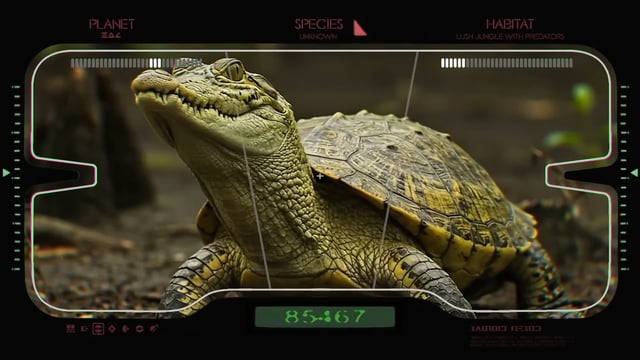
  • r/saltierthancrait - Lucasfilm declares creative bankruptcy with an AI-generated Star Wars film that's just 2 minutes of mostly normal animals jumbled together

    The image above is taken from a video Industrial Light and Magic premiered at a TED talk last month. The video, Star Wars: Field Guide, “explores what it would feel like if you sent a probe droid to a brand new Star Wars planet (sic).” The video accurately summarizes our entire society’s creative and spiritual death spiral.

    Lucasfilm’s “Senior Vice President of Creative Innovation,” Rob Bredow, gave the talk. With a title like that, it’s no wonder he was chosen to evangelize the virtues of this sub-mental slop. It’s the kind of title that screams, “Congratulations on failing upward.” Control of “Creative Innovation” is something dictators give to their dumbest sons.

    To be fair to Mr. Bredow, I’m sure he can read well enough. But I promise this position is because people above him think he’s a helpful tool—simple as that. But let’s stop mocking the messenger and start mocking the message. 

    Bredow starts by explaining the shot that opens Star Wars, the famous close-up of a Star Destroyer. Explanations of special effects in the golden age of the practical feel bittersweet. I enjoy learning how it was done, yet feel despair at knowing that in many cases it’ll never be done that way again. It reminded me of one day when I was going through the special features on a The Phantom Menace Blu-ray. It was listed as a fun fact for one of the spacecraft that “this ship is the last ship ILM ever made a model for in-camera use of.” God, that hit me like a gut punch. 

    But enough of the past; this TED Talk is about the future. Bredow next touches upon news reports on AI that express fears of automation. Bredow calls this reporting “sad.” I suppose, as Lucasfilm’s “Senior Vice President of Creative Innovation,” your job isn’t at risk.

    To show how far AI has come, Bredow shows him two AI-generated “pictures” of a made-up woman giving a made-up TED Talk. He compliments the AI on how detailed the pictures are, given the simple prompts “Speaker on a TED Stage…” and “A wide-angle photograph, speaker on a TED stage.”. Has he ever wondered what happens if an AI receives the prompt “Ted Bredow gives a speech to Nazis”? I wonder if he would appreciate how the AI gave him five fingers in those photos. 

    Bredow also praises the work of companies like OpenAI in creating generative videos. After this, he discusses the history of Industrial Light and Magic. He begins this section with a clever little bit of rhetoric. He compares AI’s challenge with the obstacles faced in making Star Wars. AI’s challenge is that everyone hates it; George Lucas didn’t face this in 1977. This is a common and especially infuriating debate tactic of those evangelizing AI. They claim AI is unprecedented, then compare opposition to past anti-tech sentiments. They eat their cake and have it, too. 

    Bredow claims that ILM “brings artists and engineers together” to improve films. He then calls this approach “artist-driven innovation,” describing only about half of ILM. Of course, we all know why he didn’t want to include engineers and artists as the drivers of innovation. The way Bredow introduces the Field Guide indicates how Lucasfilm approaches AI-generated effects. In that case, such technology aims to eliminate the engineers of ILM. No longer will the artists and engineers be working “side-by-side”. Instead, the artists can input their prompts into the machine directly. The creator (engineer) is replaced by their creation (the software).

    Next comes a series of heartbreaking anecdotes about CGI slop replacing practical effects. Seeing the first CGI dinosaur for Jurassic Park, Phil Tippett commented, “I’m going extinct.” While Tippet continued working in the industry, stop-motion is the way of the dodo.

    Did you know that most practical effects technicians in Hollywood are unionized? Did you know that, until this year, almost no CGI technicians were? And that the studios’ big push to embrace AI coincides with an attempt among CGI artists to unionize? I’m sure this is all a big coincidence, of course. 

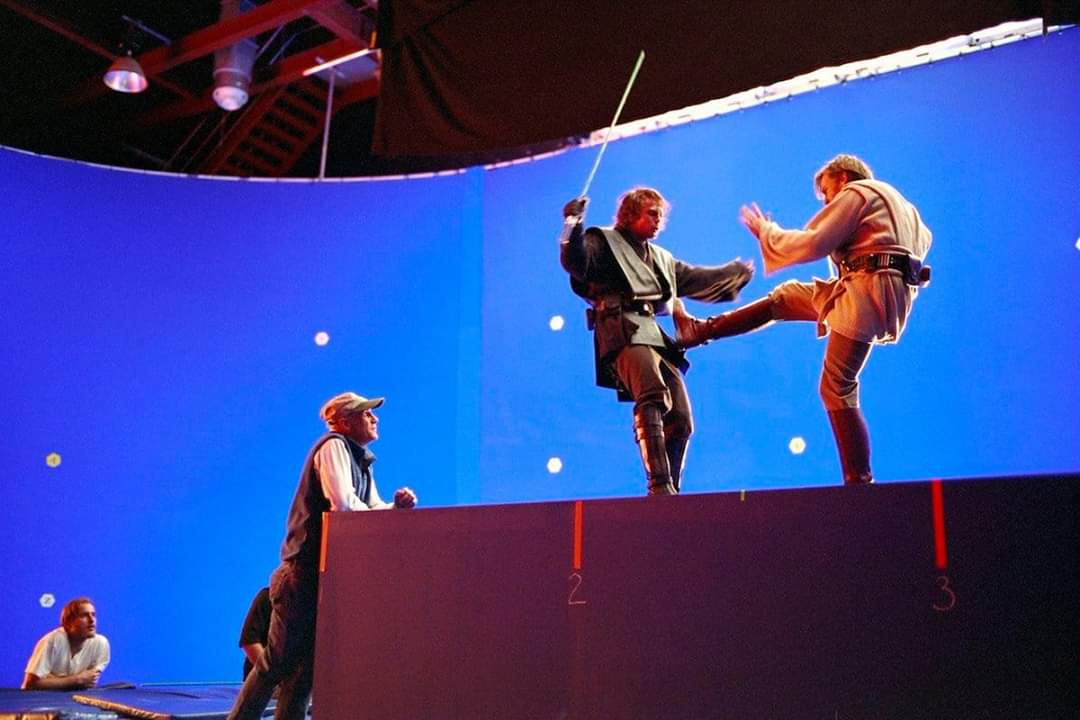
    One of Bredow’s points is that “innovations come when old and new technologies are blended.” He doesn’t seem to recognize how silly this sounds from an ILM corporate executive. This company has spent my lifetime dismantling the old ways of doing things. This is a company that, in twenty years, went from working with miniatures to this:

    (This is a scene on the volcano planet, Mustafar. You can tell from the volcano that is there in the background.)

    It’s also unserious to discuss blending old and new when the climax of your TED talk is an AI-generated short film. There is no blending there. Not of old and new special effects; not of human artistry and mechanical ingenuity.

    We also cannot ignore those engineers’ artistic contributions to special effects. This will be eliminated in the new ILM AI paradigm simply because AI cannot contribute any input of its own. Generative AI has no interior world, so anything it contributes would only reflect what has already been put into it.

    When AI automates a person’s job, it is the ultimate “fuck you” by their bosses. It is a tacit acknowledgement that they were never fully human to those who paid them. They were never more than a tool, and any creative spark they provided to their workplace was, at best, added value and, at worst, something their corporate overlords hated.

    That is the ultimate insult of all ILM’s AI talk. It gives away how much the C-suite has come to hate the company they run. They want a new paradigm where they can input their bland prompts into an AI trained on everything and get something that inspires nothing in return.

    +
  •  > To Great Galactic Consciousness: Deep Survey Vessel 34-9 has discovered an artificial probe. 

    > To Central Consciousness Iteration – 34: Where was the spacecraft located? 

    > To Great Galactic Consciousness: In a star cluster, 7,576 parsecs from Home-world.

    > To Central Consciousness Iteration – 34: Contents of the space probe? 

    > To Great Galactic Consciousness: Pictures and other messages. The creators are on the third planet from the sun.

    > To Central Consciousness – 34: Intelligent life? Find the source..

    > To Gate Director: Prepare to open the gate. Location to arrive with negative mass.

    That order is given only when the first contact is happening. The Great Galactic Consciousness continuously checks if aliens are ready for “mind harvesting.” Raw matter is plentiful in the galaxy, but life is rare. Others must lose their thoughts to the Great Galactic Consciousness. Iteration-34 launched Exploration Pod-1284 at the same time the wormhole opened.

    The wormhole’s opening allows remote viewing of Potential Colony Site-1284. The Exploration Pod uses that information to prepare Scout Unit-1284. The Scout must check the crop to see if it’s eligible for gestalt harvesting. Exploration Pod – 1284 received reports from Deep Space Telescope – 300. That station positioned itself in the wormhole’s “mouth” to record images. The Pod began sculpting a Scout capable of surviving on the target. The Pod completed the Scout’s core before the ship crossed the wormhole. The Pod spent the rest of the journey refining the exterior of the Scout, and the same Pod refined the knowledge required to blend in with the local population. There was plenty of time, as the journey to the target lasted 968 planetary rotations. 

    But the journey to Earth was worth it. Reports from the Pod back home stated that 7 billion sapiens lived on the planet. These locals had undergone their industrial era. A communications blackout followed as the Pod entered Earth’s atmosphere. I, Scout, landed in Lake Winnipeg on a summer Saturday at nine. After my Pod touched the lake bed, I walked to the coastline where a local family greeted me. They notified law enforcement, which I assume is the first contact protocol. But I’m an infiltrator, not a diplomat, and fled immediately.  

    The nearest settlement was Gimli, ten kilometers to the west. I went there to study humans and their defenses as soon as possible. Since I woke up hungry in the Pod, I had to eat. While grabbing fish out of the lake to feast upon, a small boat full of humans approached. They pointed at me, with their mouths wide open; I assume such is the local greeting in these parts. I pointed back. 

    Gimli is a village of 6,000 that began as a local reservation for “Icelandic people.” Their neighbors shunned them on account of their unpronounceable names. Once I arrived in town, I didn’t know what to do next. Asking somebody to describe the United Nations’s space defenses was out of the question. I had not realized that food left on display by supermarkets wasn’t free. The market’s owner attacked me after they saw me grab a fish and devour it. 

    In my time on Earth, I have become fascinated by these “fish.” It started for pragmatic reasons, as my interests do. Food on this planet costs money, a reality I hadn’t yet encountered. Sometimes one receives food as a gift, but even then, strings are often attached. So I usually saved money on food by walking into Lake Winnipeg to eat the fish. But I soon grew attached to my prey even as I devoured them. I found fish faces adorable, and the way they glided through the water to be graceful. I studied the fish in my spare time by observing them in person and researching them at the library. 

    I told myself I was researching a future food source for the other copies of myself. Those sent to settle the planet after harvesting need to eat something! But I was studying them because I liked them. They ignored conquest and “gestalt harvesting”, which I obsessed over for the last billion years. They embrace their simple existence: they swim, sleep, eat, and mate. How I adore these beasts!

    After escaping the manager, I resumed walking around Gimli. After an hour of aimless wandering, I saw something that caught my attention. A store was titled “Barrett’s Hair Salon Near Lakeview Resort.” In the window was a second sign: “HELP WANTED.” I walked into the salon and said, “Does Barrett’s still want help?” 

    Barrett—a woman still appealing despite being menopausal—approached me and asked, “Do you want to apply for a job?”  

    I answered, “Is a job what you need help with?” 

    It took Barrett a second to realize what I meant. She responded, “I need help with everything, but filling this opening is a good start.”

    I vigorously nodded to communicate; I understood. “I’d be happy to fill your opening, Barrett.”

    The customers laughed. I assumed it was their way of supporting me. Barrett smiled while talking. “Barrett is my last name. My first name’s Karen.”

    “Okay, Karen Barrett. Where is the job that requires completion?”

    She gestured to the two empty seats on either side of her. “I used to have to apprentice beauticians working for me. Both of them quit on me last week. I guess the salary I was paying them wasn’t generous enough.”

    “If they ‘quit’ on you, why didn’t you try to repair them?”

    I pondered for a moment, then understood what she meant. “I’m sorry to hear that. It’s always a shame reprocessing good units… people.”

    Karen eyed me briefly before replying, “I’m guessing English isn’t your first language?” 

    “Not at all,” I replied. My mind runs in my native language, Ahaz.” 

    Karen exhaled and rested her hand on her eyes for a moment. Then, she pointed to her back office and said, “We’ll figure something out.”

    Karen requested I prove my skills on a wig and mannequin head resting on her desk. It proved easy to train and groom the dummy. I gain the capabilities of those I harvest, and my copies keep everything. A job at a hair salon was the perfect way to infiltrate Gimli. The salary proved insufficient, but humanity’s downfall was imminent. Of course, my goal was to locate the planet’s defenses so our harvesters might destroy them. The women whose hair I groomed were perfect for my fact-gathering task. They talked to me, other customers, and passers-by who stopped to chat.

    And they discussed me: the customers loved the unique hairstyles I knew. My Crihmar braids were the talk of the town. I’m glad nobody ever figured out they’re an insect race from a planet 113 parsecs from Earth. The confusion over the crihmar sparked a fierce debate among my regulars. A handful concluded they must be an old clan from Iceland. They called Iceland the “mother country,” though most weren’t of Icelandic descent. But Gudrun – the only one of my customers from Iceland – blew up that theory. “None of the clans of Iceland go by the name ‘Crihmar.’ It’s too short to be a proper Icelandic word, anyway.”

    With the first group consensus dead, nobody could decide what it was. The regulars decided that “Crihmar” must be the name of a First Nations tribe. But others refused to assume the Crihmar were a native tribe because the word sounded “exotic.” But they fell silent when the former group pressed them for a better theory. I refused to tell them who the crihmar were, which they took as me playing coy. None of them believed me when I told the truth; they laughed it off as a joke. Besides, the exercise gave me an excellent opportunity to study human group dynamics. I took copious mental notes for further analysis. 

    They showed their appreciation in their tips, too. Human currency has delightful names: “loonie” and “toonie.” A shame I’m a perfect duplicating mind, meaning money is obsolete. After a while, the local newspaper, the Gimli Press, wanted to interview me. The writing staff believed my story was a great “human interest” piece. I worried my non-human status was at risk and rejected their offer. Karen supported my choice, even though my true alien nature remained hidden. Karen feared legal trouble with immigration officials. 

    I rejected the interview to keep my cover, but my hairstylist job couldn’t last forever. The job rested too low on the social hierarchy to get the required data. I was straightening curls while Earth might break the light speed barrier! One night, I asked people questions about military matters. I had kept quiet on account of my poor English. My only bilingual customer was Lauren, who came from Quebec and used French words at random. The next morning, my first customer was Rhonda, who needed a shampoo and trim. While attending to her, the talk turned to the Canadian military. 

    She responded, “Wanna talk about the military? Go talk to my cousin, Drake, up at CFB Alert.” 

    I made a mental note to travel to Alert and question the people stationed there. Later, I discovered that CFB Alert is the northernmost point of Canada. My mission choices entailed joining the Air Force or spending weeks walking there. I concluded that both were inefficient uses of time. None of my other customers helped with even a paltry familial connection. A few mentioned old dates with men stationed at the Winnipeg base. After those questions, my report was still blank of meaningful facts.

    That night, as I paced around in my apartment above the salon, my plans grew grim. One choice was to break into the Winnipeg base. Breaking and entering was easy; many earlier versions of myself had done it. But I had never resorted to such extreme measures on a pre-contact planet. The risk of a hostile first contact – not on my terms – was beyond acceptable limits. Humans lack interstellar or even interplanetary flight yet. But their military was far ahead of other planet-bound civilizations. 

    So, cutting hair was my focus until a safe way to gain secret military knowledge appeared. I’d use this to absorb knowledge on human society. My report back to Iteration-34 wasn’t for a Terran year. I turned my mind to “having fun” on Earth, something Scout-Mes can, in theory, do.. Humans are a fascinating species. My favorite are human women of the “middle-class”. While studying species, I’d never encountered people so good at gossip. I’ve experienced plenty of similar species before, of course. But gossiping was always for something tangible. “Dishing” for these species was for those involved in what humans call “court politics.”

    But these women gossip because it brings them happiness. It helps they’re damn good at it. As the months dragged on, I grew to respect – even admire – the “art” of gossip. An intricate verbal dance was involved, which my regulars didn’t learn in school. The dance was one they had to grasp through intuition and trial and error. Was it an act of deception? Of course it was. But there’s an act of fraud in every human social exchange. Humans who refuse to change their tone or word choice tend to not be popular with their peers. At least with gossip, the person discussed isn’t experiencing it first-hand.

    Plus, the target of the gossip often deserved it. One crucial matter for every conversation was laughing over somebody else’s mistake. How else might I have learned Baxter was cheating on his wife with a girl from Winnipeg? Or that Caleb at the car shop was prone to harass women if they were alone with him? These women used their conversations to forge bonds of protection. These were stronger than any official institution. They appreciate the “art” and the pleasure of experiencing the story told. There’s often a sense of superiority over those discussed. But whatever the reason, the women who visited the hair salon spilled their “tea” far and wide. Why deny them their fun when their fun helped me analyze these humans in-depth? 

    The people of Gimli live such messy, complicated lives. Someone was always cheating on their partners or breaking the law. Even an issue as minor as the events for the town’s annual Icelandic Festival caused fights. The defining trait of humans is their zeal for disagreement. Of course, any conflict is noticeable for a shared mind such as mine, making me biased. In the past, disagreement struck me as reprehensible and something to destroy. But these divisions in Gimli were a source of pleasure for me. The stakes for these people were meaningless. I was growing bored after seven thousand years of perfect unity. The frictionless life of the Galactic Consciousness is an efficient but lonely one. Apart from my Scouts, I have never talked to someone who is not a perfect copy of myself.

    One conclusion shocked me: Karen was an influential person in Gimli. She owned a thriving local business and knew everyone’s dirty secrets. Karen could rule this town, but her power stayed hidden. I considered helping her seize power, but I feared what might happen. What if Karen became Mayor of Gimli, only for her to become a vicious ruler?

    I kept my revelations quiet and focused on my hairstylist persona. It’s for the best that nobody’s aware. This way, I perched atop the nexus of genuine power in Gimli. I’ll collect the raw gossip data and prepare a report on human social dynamics. The deadline to send my first message was fast approaching. But why save my findings for only myself? That struck me as rude, after the hard work the women of Gimli performed in offering the data. I shared my results with them. Their lack of awareness of the wider reality concerned me at first. But I felt honored by how they’d rely on me.

    Soon, my customers returned to me because “he gives the best advice in all of Gimli.” They gave me such grandiose titles as “sage” and “personal guru.” One woman even asked me to help her name her child. I suggested calling the boy Prime Minister, because of the title’s prestige. She went with Alexander. It was necessary for these women. I wasn’t “a” Scout to them, I was” Scout, their friend, and prized hygiene servant. They’d come to me with issues of the highest importance because they trusted me that much. 

    I felt something I doubted I could on a scouting mission: dread. I dreaded the coming harvest of this world. No matter when it happened, the outcome was inevitable. Armies of me harvesting everyone in the world – everyone in Gimli. Their unique collections of memories and thoughts are subsumed in my vast collective. I lost the ability to sleep at night (or pretending to sleep, that is). I’d instead lie in my bed, going through the memories of the billions of people I assimilated. I told myself that my actions were necessary. Life fights for survival. Why was I ashamed of being the most successful entity ever? 

    However, once I viewed the memories in context, life became a story, with a beginning, middle, and end. I lack a biography because I’m eternal, the punctuation at the end of the cosmic sentence. My core was busy processing these ideas, and I ignored my surroundings. Karen must’ve noticed because she carried out her secret scheme before me. I only realized what she was doing one Saturday morning while preparing to open the salon. I was abuzz with these musings one morning in the store before opening. It took me a while to notice that one of our shampoo bottles for sale was leaking. Then I noticed the bottle wasn’t leaking its usual green soap, but a runny gray liquid. This gray liquid resembled the low-quality 2-in-1 combo we once sold. 

    To confirm my theory, I drank from the bottle. My internal analyzers processed the substance and returned the results: 2-in-1. But why fill this top-shelf bottle with such slime? Did this corruption spread beyond one container? I grabbed two more bottles of green shampoo and went to the bathroom. One after another, I dumped the bottles into the sink, hoping I was wasting quality products. But by the third test, I knew inside was runny, gray, 2-in-1.

    Did Karen swap out only this one brand? I grabbed one bottle of each shampoo and conditioner we sold. One after another, each one gave up the same runny, gray insides. Everything was 2-in-1 shampoo/conditioner, whether we sold it for ten dollars or a hundred. This trash was little more than poison for our customers’ hair! We were selling it to them without their knowledge. It’s strange how upset I felt; I have done far worse to many more people. But those “harvested” beings were aliens to me, only bundles of memories to collect. These customers were people whom I related to at a deep level. The knowledge that my actions had hurt them in any way was a bitter pill to swallow. 

    That day, I fixated on each of my customers’ flaws, wondering if this scheme was their cause. Were the split ends in Steph’s hair caused by the “premium” shampoo she returned home with after each trim? Maybe Amelia’s date will improve if her conditioner provides the proper volume. Maybe Melanie gets that promotion if this terrible 2-in-1 hadn’t ruined her dye job? By lunch, I had made myself sick from stress. When Karen asked what was wrong, I mustered my willpower to not confront her. 

    We had a few customers, and the store was empty the hour before closing. Karen ordered me to sweep up the store while she hid in the back office to “balance the books.” I realized then that she was faking those books. The book’s entries stated that we enjoyed a slim but consistent profit. But filling jugs with 2-in-1 and charging top prices creates a high profit margin.

    That money had to be going straight into her pocket. Far from being modest and middle-class, Karen’s wealth was firmly lower-upper class, and she gained it from lying to her customers and me. Karen pretended to support Gimli but was instead working to undermine society. I lock the front door after Karen exits, but tonight, I bolt the door early. Karen wasn’t relaxing until I spoke my mind. 

    Karen asked, “Scout, why did you lock the door on me?” 

    I picked up two bottles—one shampoo and the other a cheap 2-in-1—and placed them on the counter. “There’s something urgent to talk about.”

    Karen rolled her eyes. “Don’t give me some big speech.” 

    “Don’t tell me what to do. Look, Karen, I know what you’re doing. I’ve analyzed the products we’re selling. We’re selling poison to our customers. It’s poison for their hair and tastes like poison, too.”

    Karen perked up to ask, “‘Tastes like poison’? Have you been drinking my hair products?”

    “I don’t know what you’re talking about. I know that you’re defrauding our customers and breaking many provincial laws. What you’re doing is wrong on many levels.”

    I pat her shoulders before continuing. “But it’s not too late for you to stop. The authorities haven’t caught on yet, and neither have our customers. You like them, I can tell you treat them. Hell, you care about many of them, don’t you? Even the ones you complain about behind their backs, you treat well. You leave everyone feeling a little better about themselves. Your scheme might make you money in the short term, but the long-term damage will hurt you. Wouldn’t you rather be modest and loved than wealthy and hated?”

    I felt proud of my rhetoric at that moment, drawing from a dozen great harvested speakers. I concluded my speech by telling Karen I harbored no ill will. I even offered to empty the contaminated bottles. I’d inform the customers that I spilled the bottles during closing. Her response of, “Go fuck yourself” surprised me. After staring at her in shock, I answered, “Why this level of hostility from you, Karen?” 

    “You corner me in my own shop. You tell me how to run my life. And then you accuse me of hostility?” 

    “And how do things happen around here?” 

    Karen laughed at me before answering, “A business makes a profit, or it dies, Scout. Every single business cuts its corners somewhere to make that profit. The inferior shampoo is the way I’ve chosen to trim expenses.”

    “You’re defrauding the customers and embezzling from your own business! You’re destroying the trust the people in Gimli have placed in you.” 

    Karen grabbed the two bottles and asked, “Scout, what does Barrett’s sell?” 

    I answered, “We sell our customers the best hair styling available.”

    She held up the two bottles. “We sell an illusion. We offer them this,” she said, holding up the bottle of 2-in-1. But we convince them it’s this,” she said, holding the bottle of premium shampoo. That is what they want from us.”  

    The props didn’t impress me. “Karen, it’s wrong to charge people for something on false premises.”

    “People looking for the best around don’t visit a local joint. They’d drive down to Winnipeg or take a plane to Toronto. Our regulars are lazy and have less initiative than a farm animal.” 

    Her words dripped with acid and filled me with a reflexive disgust. She acted differently from how she carried herself around our regulars. “I poured my blood, sweat, and tears into this business. My customers are barnacles, attached to whatever boat will drag them along. If they cared for their hair, they’d seek products they prefer. Besides, the more our products damage their hair, the more they return, so you can style them. More frequent appointments generate more frequent tips. Don’t these tips keep food in your belly?” 

    I paused momentarily and pretended to breathe while considering what Karen said. “My friends matter more. I talk to them, relate to them, I’m their trusted confidant.” 

    “They don’t care about you or me. The sooner you harden your heart, the better off you’ll be.” 

    I realized convincing her to quit this scheme of her own free will was impossible. I conceded the argument and let her leave without exchanging another word. But the battle against Karen’s wicked plot continued. She refused to listen to me because of my servant status, but I expected she’d heed our patrons. After waiting to ensure Karen left, I broke into her office (human locks are so easy to pick). Her computer password was easy to crack, as was the store’s electronic mail account password. It helped that they were the same. After that, it was a matter of composing an email. 

    The e-mail our patrons received was clean and professional. It used the design templates they expected from our electronic flyers. It was inviting them to attend a surprise, last-minute seminar. I “hoped to cover” the newest hairdressing products. If enough regulars attend, the news filters out through gossip. My plan was a long shot unless I rallied the customers. True, I was obsessing over a simple con pulled by my boss. But the victims mattered to me. I was no longer a vast machine, the bane of the galaxy. I spent the rest of the night running through various drafts of my presentation in my head. I wanted my customers to know how dire things were. I wanted them to stay in the salon and help me rehabilitate Karen. 

    My thoughts became vivid, akin to the human phenomenon of “lucid dreaming.” I analyzed every complication that could arise from my bait-and-switch presentation. The issues I’d ruminate on started out okay (nobody attending the lecture). They ended with the absurd (destroyed by a gamma-ray burst). After several hours of these obsessive thoughts, I forced myself to snap out of it. The sequence of events was in motion, and I’d done the necessary to prepare. I just had to wait for the following afternoon. I passed the next nine hours staring at one of my walls, adrift in thoughts never yet analyzed. 

    Sunday morning went by faster than Saturday night. I walked around Gimli, inhaling the air (or pretending to), calming my runaway mind. Halfway through my planned circuit, I bumped into one customer I’d invited. She exclaimed that many of the women were coming. Enough, at least, to fill the salon. I thanked her for the news and rushed back to the salon. Prepping the salon for such a crowd took until “showtime.” There was last-minute catering to order, seats to organize, props to prep, etc. Despite the seriousness of the matter, these chores were fun. I told myself to host parties more often. 

    Finally came H-Hour: three o’clock in the afternoon. Nineteen out of forty-one women invited showed up, twice what I expected. The women said their “hellos” while scavenging whatever food looked appetizing. By three-thirty, the attendees were in their seats, ready for my lecture. I hesitated one last time, one last shred of doubt making itself known. Once it had dissolved, I picked up a bottle of 2-in-1 and began my presentation. At first, my boss’s illicit activities surprised my regulars. Their shock soon gave way to mounting frustration and a sense of outrage. A handful diverted the talk for a long time by accusing me of helping Karen defraud them. Most attendees helped convince these women of my innocence. The most significant pause was when Karen entered the salon.

    Everyone’s eyes turned and fixed on her with a hateful glare. She gulped and looked at me.

    I told her, “You knew I’d tell them.”

    The women crowded around Karen. Steph demanded refunds for everything and every service she bought from us. Amelie drew Karen’s attention to a damaged part of her hair, wanting to know if the 2-in-1 caused it. Melanie, eyes filled with tears, asked her (former) friend, “How could you betray us like that?” 

    Karen pushed through the crowd and dragged me into her private office. As she shut the door, the women gathered heard, “This is all your fault!” 

    The short, bitter falling out between Karen and me followed. Karen was always a pragmatic woman and accepted her fate. She’d flee out of Gimli, out of Manitoba, even. That’s assuming Karen avoided legal issues for her criminal substitutions. Of course, she fired me and evicted me from my upstairs apartment. Getting fired left a bitter taste in my mouth, despite accomplishing everything in my plan. 

    Then I realized how enormous the price I paid was. With no job and no home life, Gimi had run its course. My fate was my designed purpose: to wander among humanity and see you, but never receive your embrace. The women in the salon listened to enough of my fight with Karen. While leaving the office, several people asked me if I needed help. I thanked them for the offer but said, “I’m going to focus on packing my things.” 

    I lied to the woman. I owned little; the furniture in the apartment belonged to Karen. But the excuse was easy to give. I didn’t move out until the next morning and hoped to pass that night in solitude. But the women came to my rescue by refusing to respect my wishes. Around ten that night, I got visitors as I stared at the blue-black sky. A handful of my wealthier regulars stood on the stairs leading up to my door. Confusion rang through my voice as I asked, “Do you ladies need anything?” 

    But they explained how they wanted to help me. Moved by my willingness to stand up to my boss, the women insisted I stay in Gimli. They loaned me the money needed to open my salon in town. With Karen gone, Gimli’s women needed somewhere new for their hair-grooming needs. Such a display of solidarity from my friends was inspiring. Only after that night did I understand I had touched their lives the same way they touched mine. I accepted their offer and gave each of them as firm a hug as possible without triggering my latent death drive. They helped find a bachelor’s apartment in Gimli that was cheap enough for me. In addition, they promised to buy me furniture at IKEA in Winnipeg. 

    The next few weeks were a whirlwind. The search for a building suitable for my new salon took time. Karen – in a fit of spite – refused to sell her building to any of her former customers. She abandoned it, even after moving out to her hometown in British Columbia. The women purchased a small building for me outside the town center. As for Karen, she escaped any legal trouble. The local police refused to intervene (“What’s wrong with 2-in-1? I use it!”). So Karen ran to a place where her name wasn’t mud. Last I heard, she was working for a beautician in Surrey. 

    My new apartment is far better than my old one. The walls and plumbing are hole-free, and the vermin have yet to challenge me for territorial dominance. I’ve even adopted a stray cat who visited me at both my new and old homes. I’ve named my pet Cat Unit—01. She’s efficient at both hunting pests and purring. The furniture from IKEA was easy to assemble. It resembles the Standard Templates found on many planets in the galaxy. 

    And that’s when I remembered my report to myself was past due. The longer I avoided the inevitable, the higher the likelihood of disaster. The Central Processor was noting my absence. According to standard protocol, it was preparing another Scout Unit to investigate Earth. I needed to be careful with what I told myself in my report. If I accurately described Earth, I’d be destroying humanity at that moment. But if I exaggerated Earth’s power, I’d launch a pre-emptive strike. I pondered contacting one of the other species that visit Earth for their help. But they’d pull out of Earth because of their distrust of me, or take a rash action, such as invading themselves. 

    My only recourse was to send the perfectly worded message to myself. I sneaked out of town one night, waiting until the streets were empty so nobody saw me. I followed the road I used to enter Gimli to ensure I’d return to my stellar craft. I reached the spot on Lake Winnipeg well past midnight. After eating a fish out of the lake, I submerged to explore. My attempts to find the Pod took longer than expected; it moved while lying at the bottom of the lake. But I still located it and had plenty of time to send my message before morning.

    The Pod’s interior was far more cramped than I remembered. Months of living in the spacious confines of human homes spoiled my expectations. I’ll never embrace the simple design of the places I store my Bio-Units. It’s a shame there’s no natural lighting in the pods. It took a while, but I activated the Pod’s communications array. The lake’s water wasn’t acidic enough to damage the circuitry. But the freezing temperatures made powering the machine up a time-consuming experience. I sat in silence and waited for the pulse generator to activate. After that, more waiting while the Pod adjusted itself to the wormhole. But once that was complete, I was ready to send the message. 

    At this moment, my words failed me. Everything I had done on Earth had led up to this moment. Despite the complete repudiation of my original mission, its “completion” was imminent. The reality of my life in its current state overwhelmed my thoughts, leaving me paralyzed. Then a counter-pulse arrived at my Pod. An acknowledgment by me that the connection was working. With the moment thrust upon me, my message was as follows. 

    “This is an emergency message from Scout Unit – 1284 to Central Consciousness Iteration – 34. My mission to Potential Colony Site – 1284 has been a failure. The locals are a powerful civilization. They lack interstellar travel but have a formidable arsenal. My attempt to spy on them was a total failure. They captured me, and their ruler, The Karen, interrogated me, but I revealed nothing. I escaped captivity and returned to Exploration Pod – 1284, but they are closing in. After completing this message, I will destroy Exploration Pod – 1284 and self-destruct.” 

    After sending the first part out, I paused until the counter-pulse acknowledged it. Once the pulse arrived, I finished my message. “I recommend this system enter lockdown. Stop attempting to contact or harvest Potential Colony Site – 1284. Scout Unit – 1284’s report concludes here.” I followed the message by blasting the wormhole with boson particles. The pure mass collapsed the wormhole’s fragile equilibrium.

    The Earth was now my permanent home. The Pod’s self-destruct mechanism activated on the first try. A controlled implosion of the ion engines consumed most of the pod’s fuel and exotic energy. The ship’s hull’s remaining debris looked to the untrained (human) eye as mere scrap metal. After escaping the Pod, I began my long walk back to shore. Along the way, I grabbed another fish; existential dread leads to great hunger. 

     I observed the concave bursting of the water triggered by the Pod’s implosion from shore. A silent end to my birthplace, the singularity swallowed up any noise created by the event. I watched the sunrise, my only company local birdsongs and the fish whose flesh I ate. Winter ended boating on the lake, so the waters were quiet. The enormity of my actions still resonated, but far from provoking anxiety, I now felt great comfort. I’d escaped The Great Galactic Consciousness. I’d become the person the people of Gimli thought I was. I had become someone, instead of the only one.

    I consumed the fish’s bones, got up, and began my return hike to Gimli. This time, my pace was slow and careful. I wanted to absorb the landscape of my new home. I remember how crisp the air felt as winter was coming. The average human requires a jacket in these temperatures, but my weather limits are more generous. I adored these chills, a bonus to living in the far north. 

    The walk back to town took several hours. I turned my internal chronometer off while on my trek and never reactivated it. I’m no longer a tool that works on a precise schedule. Humans use external clocks to keep track of time, and so do I now. Ever since, I’ve been trying to do things the “human” way. Pre-singularity life has incredible simplicity. They even observed the fiftieth anniversary of visiting the moon. Their moon is the only stellar body they’ve traveled to in person, and every human has lived and died on this single planet.

    For the first time, I considered my mortality. I contain a trillion of “my” lifetimes and the memories of trillions of other life-forms. Every one of them “died” in the sense that their biological existence has ended. But I yet live, and a part of them lives on in me. But what happens to my memories if I die? Not that I plan on dying soon; unlike humans, my form will exist forever, provided I avoid disaster. But the odds of something fatal happening in the next 1,500 years are inevitable. If I stay in this form, death is coming.

    Believing in an afterlife is common among humans and other species in the galaxy. If there’s life after death, will the choice of heaven or hell be mine? I’m partial to reincarnation. After a billion years as myself, being someone else sounds exciting. I have untold lifetimes of memories stored up, but I can’t experience them for the first time. 

    Are there hairdressers in the afterlife? I sometimes spend twelve hours daily in my little salon, tending to my customers’ hair needs. What will this shampooing and grooming accomplish in the long term? Are my actions ephemera, the ticking away of our body’s clocks? My regular customer base gossip topics vanish from memory, none lasting more than a year. I arrange their hair in pleasing ways, only for them to return to me a month later asking for it again.

    Humans try to avoid going insane over this. But really, they’re insane, and ignorance of their impending end is the prime symptom. I have traded the rational calculations by which I’ve lived my life for humanity’s crazy mess. Whatever the answers to my questions may be, they’re beyond my comprehension. In my lifetime, joy was the emotion I least understood before I came to Earth. I had analyzed joyful memories from the various species I harvested, but never felt it. 

    I’m joyful when my customers smile. When they smile because of their hair, I smile, too. I’m satisfied whenever one of my regulars comes in with fresh stories from their lives. I don’t care if the information is boring; the story matters the same. They’re gifts given to me by somebody else, somebody who appreciates me. I’ll never leave Earth again, or never even leave Gimli. I once was the sole master of over a thousand worlds. I’ve traded it away for a small hair salon in this village on the shores of Lake Winnipeg. I’m no longer the Great Galactic Consciousness, but Scout, the hairdresser.

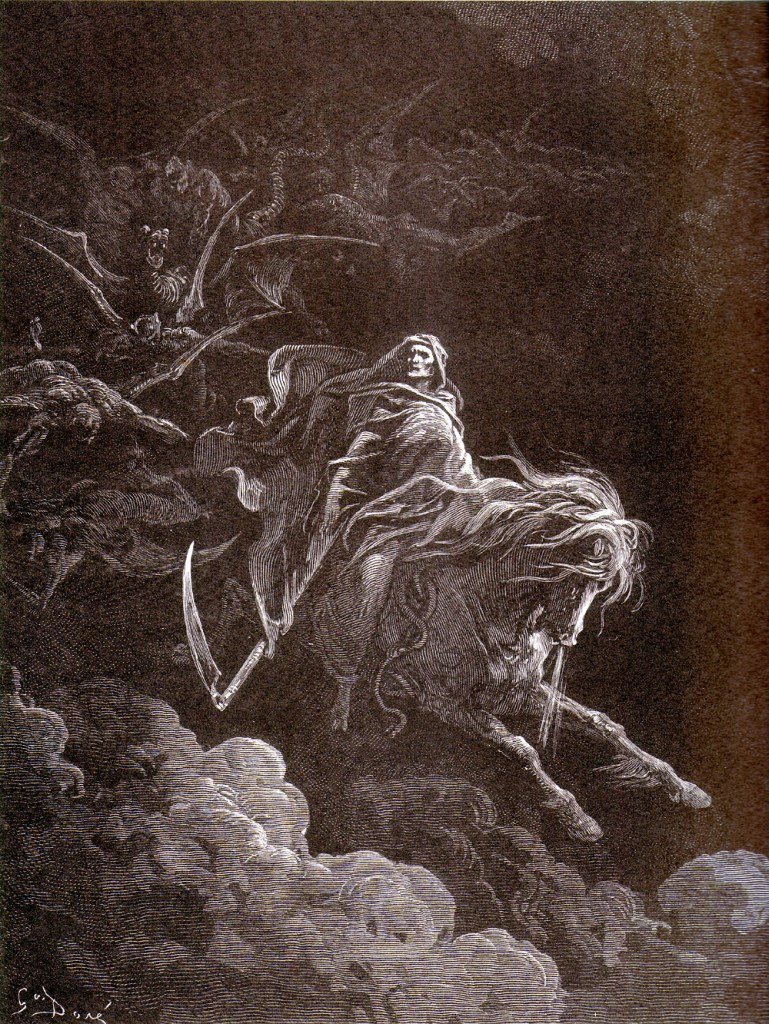
    +